
AI isn't just an outcome of ERP modernization—it can become an accelerator for getting there. ECC can prove AI. S/4HANA can scale it.
AI shouldn't sit at the end of your ERP roadmap. It can help accelerate the roadmap itself.
AI isn't simply something organizations gain after ERP modernization. It can create value before the transformation, accelerate the migration itself, and scale into intelligent operations on S/4HANA.
For years, enterprise transformation has largely followed a sequential model: Modernize the ERP. Migrate the data. Standardize business processes. Reduce customizations. Then introduce new technologies and innovation.
Agentic AI is beginning to challenge that sequence. Organizations don't have to complete their S/4HANA transformation before creating value with AI. And increasingly, AI can play a role in accelerating the transformation itself. That creates a different path forward: Start. Accelerate. Scale.
This isn't AI as an add-on to the ERP roadmap. It's AI becoming part of the roadmap itself.
Organizations operating ECC don't need to put AI initiatives on hold until their S/4HANA transformation is complete.
As discussed in Part 1, Agentic AI can already support high-impact processes across ECC—from invoice automation and master data quality to financial anomaly detection, supply chain exceptions, document processing, customer service, procurement, and workflow approvals.
These initial use cases serve another purpose beyond immediate ROI. They help organizations understand what enterprise AI requires.
Organizations can begin answering these questions before the migration is complete. That makes AI readiness part of transformation readiness.
The second opportunity is even more interesting. AI doesn't have to sit at the end of an S/4HANA program waiting for the new platform to go live. It can help accelerate the journey there. ECC-to-S/4HANA migrations involve large volumes of complex, repetitive, and knowledge-intensive work.
Migration teams spend significant time analyzing legacy data, mapping fields, transforming structures, and preparing data for the target environment.
AI-assisted approaches can reduce manual mapping effort by up to 60–70%, improve data quality in the target system, and accelerate data-readiness timelines.
Years of ERP customization can create substantial technical debt.
AI can help analyze existing custom code, identify remediation requirements, and support modernization efforts. The deck identifies the potential to reduce custom code footprint by 30–50%, accelerate remediation from months to weeks, and identify technical debt earlier in the migration.
Testing is one of the most resource-intensive components of an ERP transformation.
AI-enabled test automation and validation can reduce manual testing effort by 60–80%, shorten UAT cycles from months to weeks, improve confidence in go-live, and identify defects earlier in the lifecycle.
ERP rarely operates in isolation. Organizations may have hundreds of integrations connecting SAP to applications, suppliers, customers, data platforms, and other enterprise systems.
AI can help accelerate interface remediation and validation, improve third-party integration reliability, and reduce integration risk at go-live. Put together, the business proposition becomes simple:
AI can compress transformation timelines, reduce risk, and accelerate time to value. That changes AI from something delivered by transformation into something that can help deliver the transformation.
If AI can already create value around ECC, why does S/4HANA matter? Because there's a significant difference between deploying an AI use case and creating an enterprise foundation capable of scaling intelligent operations.
With ECC, AI may often be implemented as point solutions around individual processes. Scaling those solutions consistently across business units and geographies can become more complex, particularly when organizations have heavily customized processes, fragmented data, or inconsistent governance.
S/4HANA changes the foundation. The platform provides real-time data processing, clean-core standardization, embedded AI capabilities, integrated business processes, advanced analytics, BTP connectivity, event-driven architecture, and the governance needed to support AI at enterprise scale.
The distinction is important: ECC can help you prove AI value. S/4HANA can help you industrialize it.
Clean core is often discussed in the context of simplifying ERP and reducing customizations. But it has another implication: AI scalability.
A simplified data model and more standardized business processes give AI more consistent context to operate against. Instead of every business unit running heavily customized versions of a process, organizations can establish more common patterns, policies, data structures, and workflows. That consistency matters when agents begin making or executing decisions. S/4HANA's clean-core approach can therefore become more than an IT modernization strategy. It becomes part of the enterprise AI strategy.
Not every AI requirement will be solved by embedded ERP functionality. Organizations will continue to have industry-specific processes, custom business requirements, external AI models, and applications outside SAP.
SAP Business Technology Platform (BTP) provides the extension and orchestration layer for those scenarios. BTP extends S/4HANA with custom AI agents, external models, and enterprise-specific use cases while supporting broader automation and integration. That becomes particularly important as organizations move from deploying an agent to managing multiple agents across multiple processes.
The strategic challenge shifts from building individual AI capabilities to orchestrating an intelligent enterprise ecosystem.
This is where the ERP conversation gets much bigger. The long-term opportunity isn't an AI assistant sitting beside every application. It's an enterprise where people, agents, applications, data, and workflows collaborate across business processes.
Imagine a supply disruption:
The workflow escalates the appropriate decision to a human where required and executes approved actions across enterprise systems.
That is fundamentally different from asking a chatbot a question. It’s a model where intelligence becomes embedded into how the enterprise operates. And that's why the underlying ERP, data, integration, and governance foundation matters.
As agents gain greater ability to act, governance becomes more important. Organizations should be particularly cautious about blind trust in AI outputs.
AI scores without sufficient explainability can create audit gaps; frequent inaccurate alerts can erode user confidence and make it harder to identify what truly requires attention; and one global model may not work across different business scenarios. Models also require feedback loops and continuous tuning to remain effective.
That means enterprise Agentic AI requires a balance between autonomy and accountability.
The goal isn't autonomous everything. The goal is intelligent automation with the right level of control.
The path toward the Agentic Enterprise doesn't need to begin with a massive enterprise-wide deployment. It can begin with a practical roadmap.
Identify high-impact processes where AI can reduce manual effort, improve accuracy, accelerate decisions, or reduce risk.
Prove value. Establish governance. Learn from real-world deployment.
Apply AI to data mapping, custom code remediation, testing, validation, and integrations to reduce the complexity and effort associated with ERP modernization.
Use the transformation as an opportunity to improve data quality, simplify processes, and address technical debt.
Use S/4HANA's real-time data, clean core, integrated processes, BTP capabilities, embedded AI, and governance foundation to move beyond point solutions.
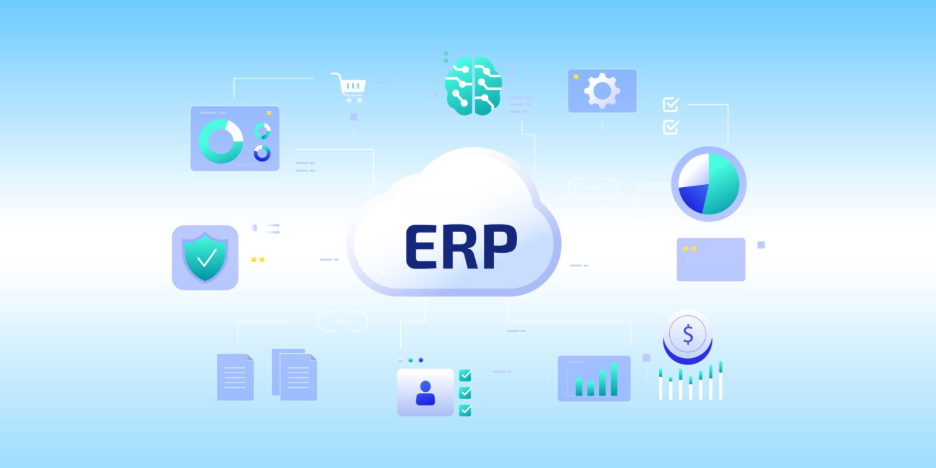
The future of ERP isn't simply S/4HANA. And the future of AI isn't simply Agentic AI.
The real opportunity comes from bringing ERP, enterprise data, business processes, AI, and people together into an intelligent operating model.
Organizations don't have to wait for S/4HANA to begin that journey. AI can create practical value around ECC today. It can help accelerate the migration itself. And S/4HANA can provide the foundation to expand from targeted AI use cases into scalable, intelligent enterprise operations.
At GyanSys, we believe the path forward is clear: ERP transformation is no longer just about modernizing the system that runs your business. It's about building the foundation for a business that can continuously understand, predict, and act.
With 20+ years of enterprise transformation expertise, GyanSys helps organizations activate AI across systems, data, and processes that power business. We build practical AI solutions, intelligent applications, and end-to-end automations that solve real challenges and create measurable value.
Whether you have a use case in mind or are still figuring out where AI can make the biggest impact, we can help you prioritize the right opportunities, build the solution, and scale what works.